Team building activities for work are one of the simplest ways to improve communication, lift morale, and make a team feel genuinely connected — when they're chosen well.
The problem with most guides is that they hand you a list of fifty games and leave you to figure out which ones actually land. This one is built differently. It starts with what makes an activity succeed, then gives you ready-to-run ideas for in-office, remote, and hybrid teams — all low-prep, all tested in real workplaces.
Whether you run a weekly happy hour, a monthly team event, or a two-minute energizer before a meeting, you'll find something here you can use today.
What Makes a Team Building Activity Actually Work
Before the list, it helps to understand why some activities succeed and others quietly fail. The same four principles come up every time.
- Low friction to join. If it takes more than a minute to explain or requires an app download, participation drops.
- A clear goal or outcome. People engage when there's a point — a winner, a score, a result.
- Short and dynamic. Energy fades fast, especially on video calls. The best activities run 10 to 30 minutes.
- A touch of competition. Light, friendly rivalry turns passive watchers into active players.
If you want a deeper look at why people skip activities in the first place, read why employees don't engage in team activities.

Quick Icebreakers for Meetings
Perfect for the first five minutes of a meeting, when you want to warm the room up without derailing the agenda.
A few that always work
- One-word check-in: everyone describes their week in a single word.
- Rose and thorn: each person shares one highlight and one challenge.
- Show and tell: bring one object on your desk and explain why it's there.
Why it works
- Zero preparation
- Works for any group size
- Gets quiet team members talking early
Competitive Games That Bring Energy
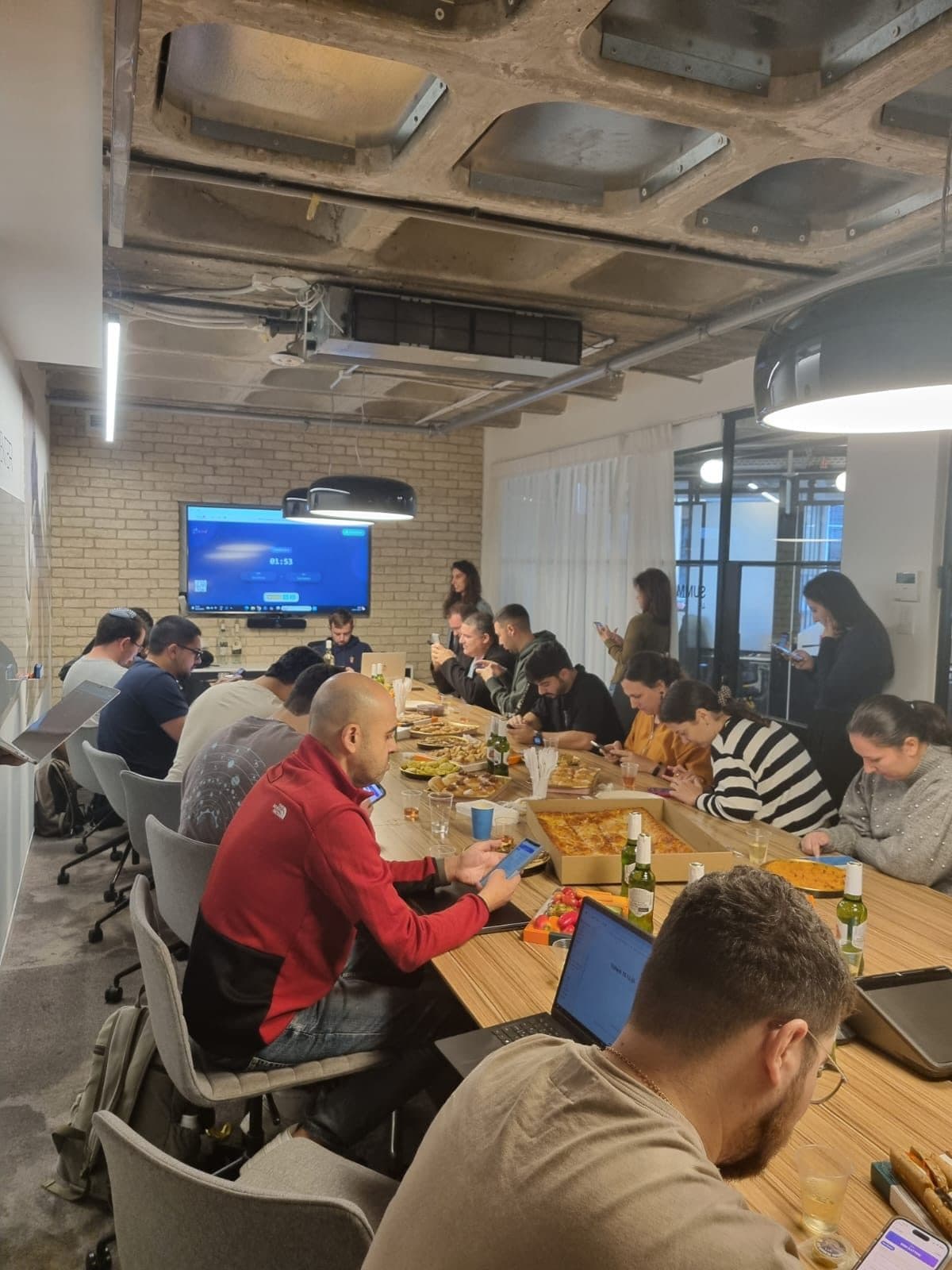
When you want noise, laughter, and real involvement, competition is the fastest route there.
- Wikipedia Race: everyone starts on the same Wikipedia page and races to reach a target page using only internal links, in the fewest clicks. Fast to explain, impossible to put down, and it works identically for remote and in-office teams.
- Team trivia: classic for a reason. Customize the questions to your company and it becomes far more engaging than generic trivia.
- Live polls and predictions: quick rounds where teams guess outcomes and score points.
Why it works
- Instant involvement
- Easy to track a clear winner
- Scales from five people to fifty
Activities for Remote and Hybrid Teams
Distributed teams need activities that work over a screen without awkward silences or complicated setup.
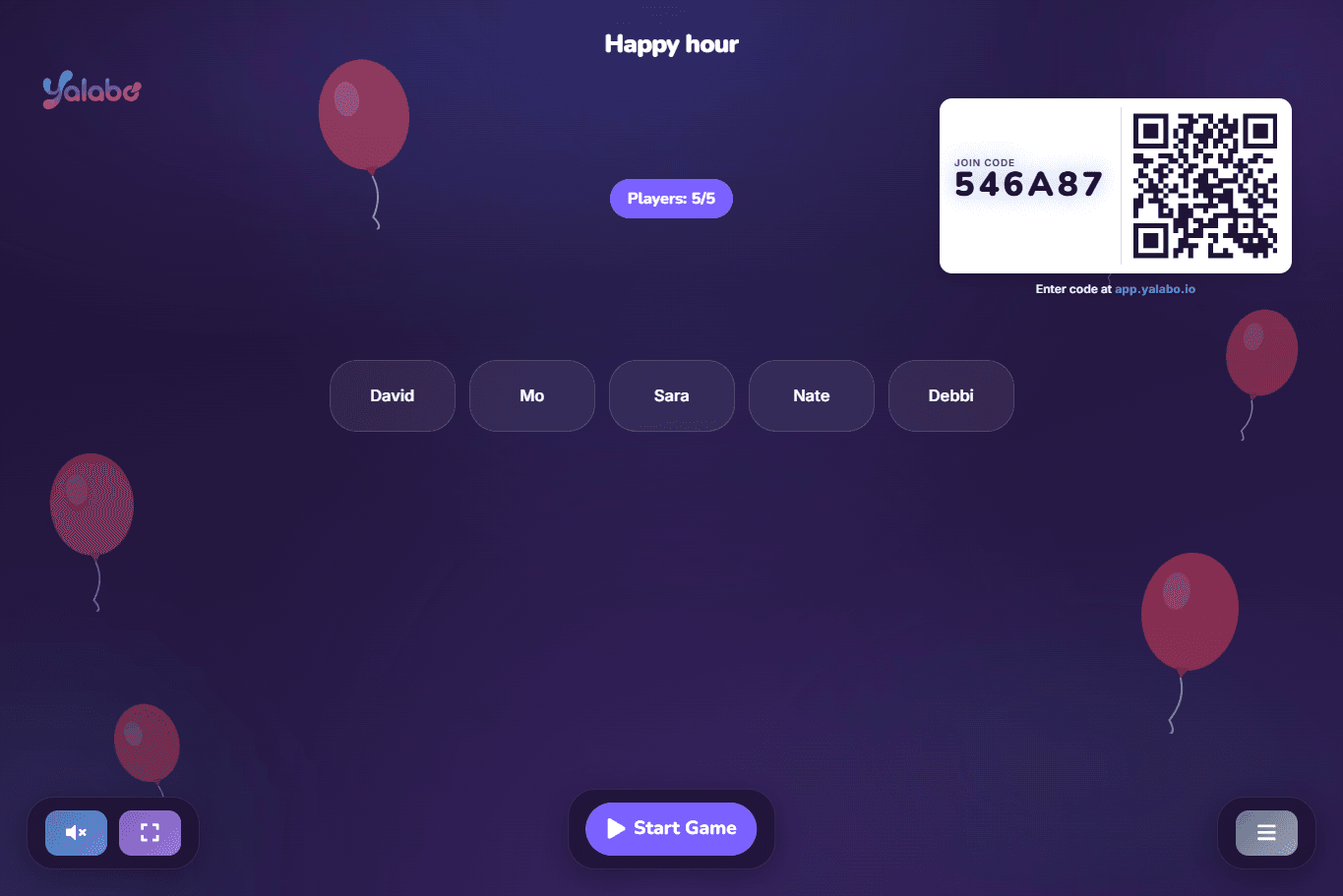
- Online team games: browser-based games everyone joins from a shared link — no installs.
- Virtual coffee roulette: randomly pair people for a 15-minute informal chat.
- Photo challenges: a quick theme ("your view right now") and everyone shares a picture.
Why it works
- No physical presence required
- Bridges office and at-home team members equally
- Repeatable every week without extra effort
Low-Prep Classics That Always Work
Sometimes the simplest formats deliver the most. These need almost nothing to run.
- Two truths and a lie: each person shares three statements; the group guesses the false one.
- Who am I: guess your assigned identity using only yes-or-no questions.
- Would you rather: rapid-fire either-or questions that spark debate.
For a full breakdown of easy formats like these, see 5 best happy hour activities for work. Planning a bigger moment? See our guide to team building games for company events.
How to Choose the Right Activity
With so many options, narrow it down using three variables.
1. Team setup
Remote teams need digital-first formats. In-office teams can mix physical and digital. Hybrid teams should default to whatever works on a screen, so no one is left out.
2. Group size
Small teams suit conversation-based games. Larger groups need structured, competitive formats with clear scoring.
3. Time available
Five minutes calls for an icebreaker. Thirty to forty-five minutes opens the door to a full competitive game.
Common Mistakes to Avoid
Even good activities fall flat when these slip in.
- Making it mandatory in tone. Encouragement beats obligation every time.
- Choosing something that needs heavy prep. If it's hard to repeat, it won't last.
- Running the same format every week. Rotate to keep it fresh.
- Skipping the outcome. No winner, no goal, no momentum.
How to Run Activities Consistently
The hardest part of team building isn't running one great activity — it's running them regularly without it becoming a second job.
The teams that keep engagement high usually stop reinventing the wheel each week. Instead of preparing a new game from scratch, they use a platform that centralizes ready-to-play activities, so launching one takes seconds rather than hours. That single shift is often the difference between a one-off event and a habit the team looks forward to.
Final Thought
The best team building activities for work aren't the most elaborate ones. They're the ones that are easy to join, quick to understand, and genuinely fun to play.
Start with one simple, repeatable format. Get participation up. Then build from there.
Ready to play?
Pick a game and play with your team
Choose from our games, create one in seconds, share the link, and your team is playing in under a minute.